84644007
FO Patch Cord LC/LC Duplex Uniboot, EZ-F, PPT, 50/125 OM4, LSZH, LL, 5 m


FO Patch Cord LC/LC Duplex Uniboot, EZ-F, PPT, 50/125 OM4, LSZH, LL, 5 m
FO Patch Cord LC/LC Duplex Uniboot, EZ-F, PPT, 50/125 OM4, LSZH, LL, 4 m
FO Patch Cord LC/LC Duplex Uniboot, EZ-F, PPT, 50/125 OM4, LSZH, LL, 3 m
FO Patch Cord LC/LC Duplex Uniboot, EZ-F, PPT, 50/125 OM4, LSZH, LL, 2,5 m
FO Patch Cord LC/LC Duplex Uniboot, EZ-F, PPT, 50/125 OM4, LSZH, LL, 2 m
FO Patch Cord LC/LC Duplex Uniboot, EZ-F, PPT, 50/125 OM4, LSZH, LL, 1,5 m
FO Patch Cord LC/LC Duplex Uniboot, EZ-F, PPT, 50/125 OM4, LSZH, LL, 1 m
The company has introduced the «Guide for Designing the Fiber Optic Subsystem of Structured Cabling Systems (SCS) for Data Centers» — a practical tool for engineers, designers, and system integrators working with modern data center infrastructure.
The document is designed to simplify the design of fiber optic cabling infrastructure, improve predictability of link performance, and help specialists make technically sound decisions when building high-speed data networks..

Today’s data centers face rapid growth in data transmission speeds and increasing connection density. Support for 400G and 800G networks, as well as the expansion of infrastructure for artificial intelligence and high-performance computing, places new demands on cabling architecture.
In this environment, the key requirements include:
The guide systematizes approaches to building such solutions and provides reference configurations of fiber optic channels for different application scenarios.
The document was developed as an engineering guide focused on practical use in designing the fiber optic subsystem of structured cabling in data centers.
It includes:
Each configuration is accompanied by tables showing key link characteristics — including maximum distance and allowable link loss — enabling engineers to quickly evaluate the suitability of a given design.
The guide also covers the application of a data center infrastructure platform that includes:
The modular architecture and support for 8, 12, 16, and 24 fiber connections enable the creation of scalable fiber optic cabling links with minimal loss and high port density.
One of the key goals of the guide is to reduce errors during the design phase. Component tables, configuration examples, and detailed fiber optic link parameters allow engineers to quickly determine the optimal connection architecture and ensure predictable performance of the cabling system.
Modern computing clusters — particularly those designed for artificial intelligence — require highly scalable and high-performance network infrastructure. The development of the fiber optic subsystem of structured cabling becomes a fundamental element in building such data centers.
The new design recommendations help create infrastructure that is ready for future increases in data transmission speeds and the continued evolution of high-performance digital platforms.
Patchwork took part in the industry exhibition IT-OCS 2026, where the company presented the MYCELIUM® fiber optic solutions ecosystem designed for building modern infrastructure for data centers, AI clusters, and Passive Optic LAN networks.
At its booth, Patchwork showcased key components of the MYCELIUM® ecosystem — a system-based approach to fiber optic infrastructure that integrates connectivity platforms, fiber optic cabling systems, server racks, and cable routing solutions.
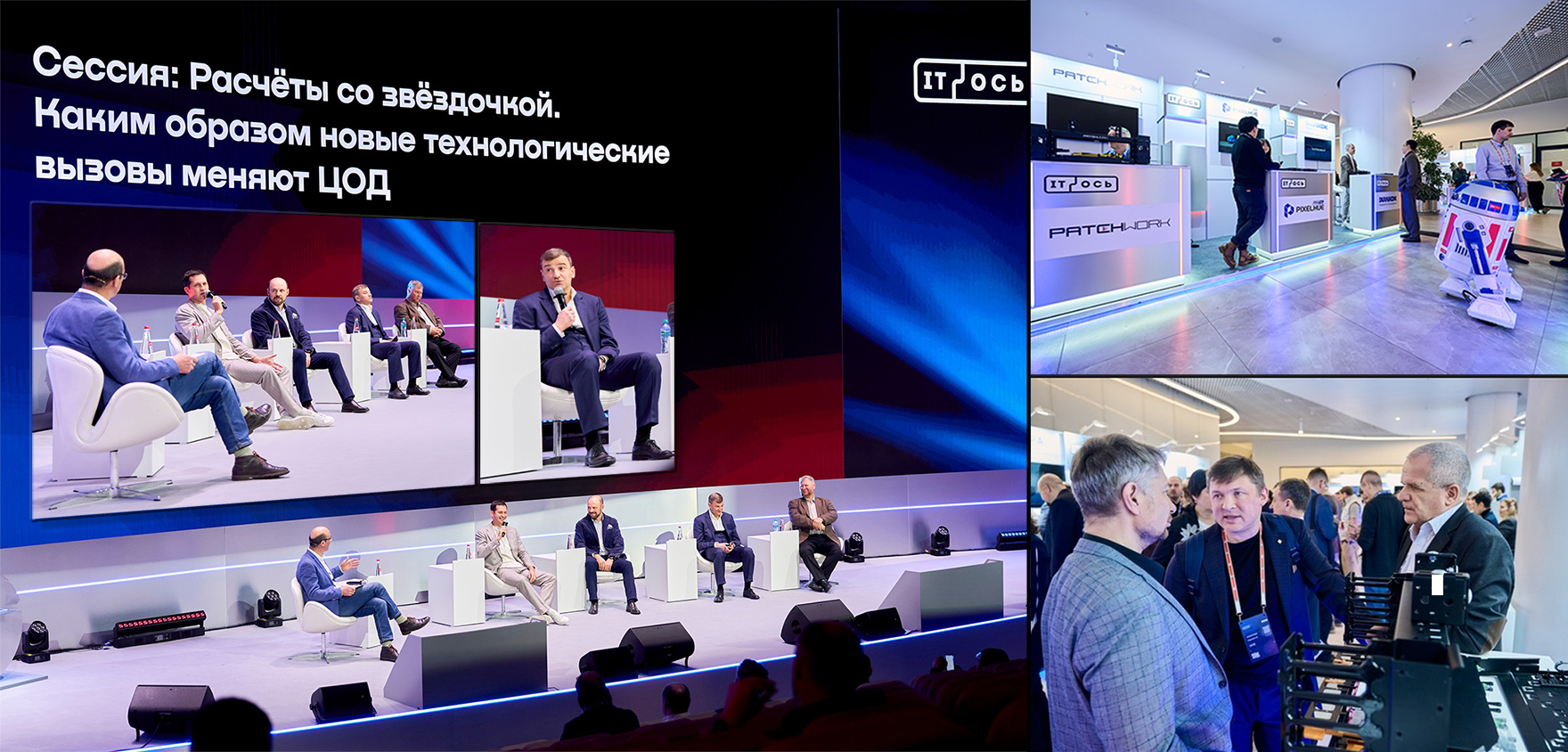
Particular attention from visitors was drawn to the CERCIS® fiber optic panels , featuring sliding blade architecture and flexible cassette installation, as well as CURRANT® cassettes, which enable a wide range of fiber optic channel configurations and provide smooth migration to modern high-speed data transmission protocols.
The exhibition also featured Patchwork fiber optic assemblies, which form the core of the MYCELIUM ecosystem. The company manufactures assemblies with fiber counts from 1 to 144 fibers, supporting SC, LC, MPO, MTP, and VSFF (MDC, MMC) interfaces and designed for 400G and 800G infrastructure, increasingly demanded in AI and HPC environments.
Visitors were also introduced to other components of the system, including:
Solutions for high-density connectivity and modern data center architectures also attracted significant interest, including cable management systems and chassis designed for blade switch connectivity.
Throughout the exhibition, Patchwork specialists held a series of technical discussions with partners, system integrators, and infrastructure designers, addressing practical aspects of designing fiber optic subsystems for next-generation data networks and AI infrastructure.
Participation in IT-OCS 2026 provided Patchwork with an excellent opportunity to demonstrate its system approach to fiber optic infrastructure and to strengthen collaboration with the professional community.